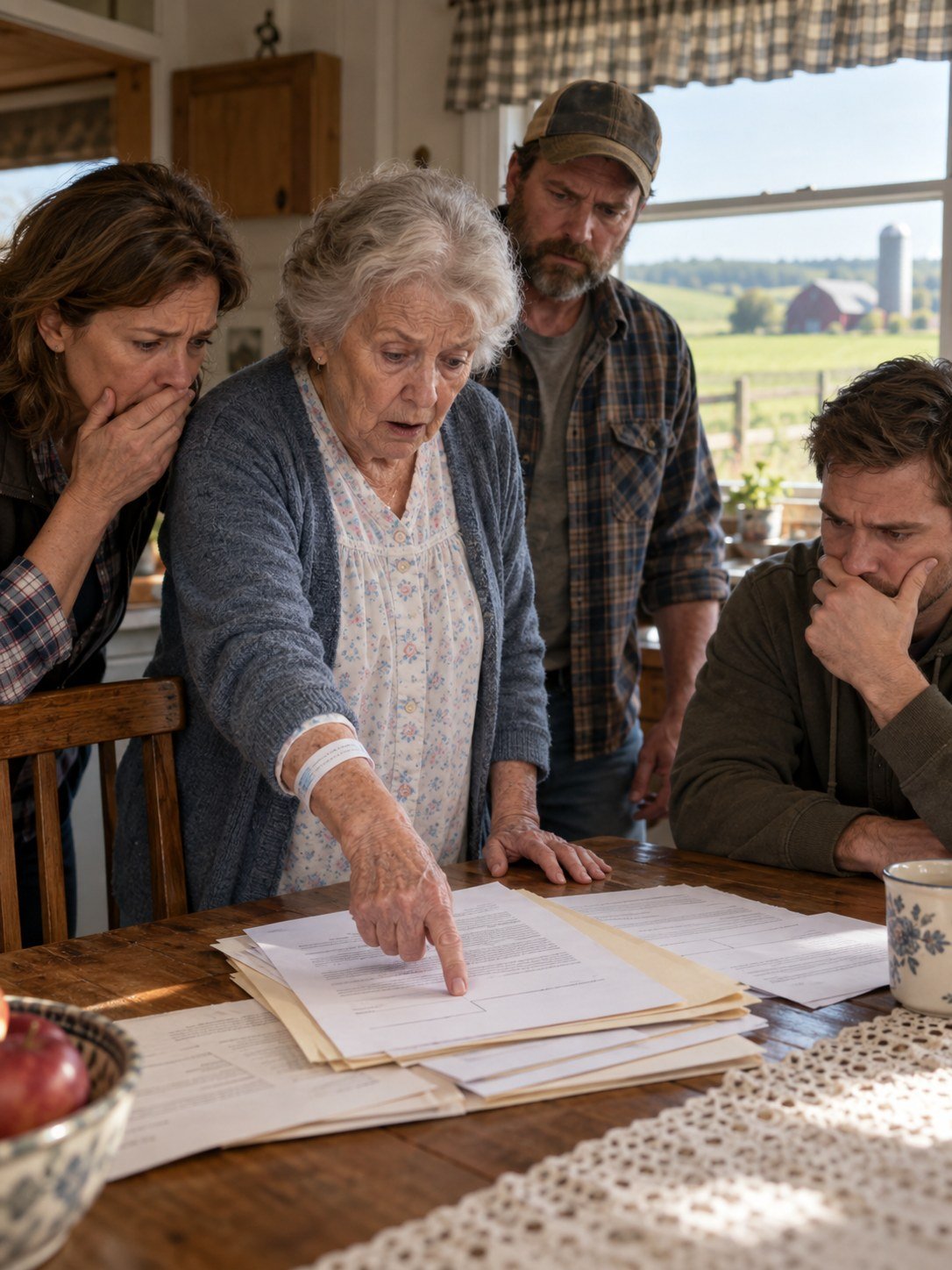
Martha Cole returned from a long hospital stay to find real-estate papers spread across the farmhouse table and a sale sign beside the road. It looked like an ordinary moment, but one small detail made everyone nearby look twice. The room seemed to grow still as familiar surroundings took on an unfamiliar meaning.
Her three adult children said the farm was too much work and assured her that the transaction was nearly complete. Years of love and sacrifice are often hidden inside routines that families learn to take for granted. That kind of unnoticed devotion can shape a household long before anyone finds words for it.
Martha read the contract slowly, then pointed to a blank signature line reserved for the trust that owned forty acres around the house. Nothing in the quiet room suggested that a secret had been waiting there for years. Small physical details made the moment believable: worn edges, careful handwriting, and marks left by ordinary use.
Her children had assumed she held the land personally and had negotiated with a developer before checking the deed. Memory does not always announce itself; sometimes it waits in a drawer, a pocket, or a familiar place. No photograph could capture all the years that had quietly collected around the people standing there.
The trust had been created by Martha and her late husband after a neighboring farmer lost his property during medical treatment. At first, the discovery raised more questions than answers, and nobody knew who should speak first. Each answer opened another memory, forcing everyone to compare what they assumed with what had actually happened.
Its terms required unanimous approval from Martha and all grandchildren over eighteen before any sale outside the family. The hardest part was realizing how easily a life of quiet service could remain unseen by the people closest to it. The people involved resisted rushing, because a truth carried for decades deserved more than a quick reaction.
Two grandchildren had not even been told, including Anna, an agriculture student who had repeatedly asked to help manage the farm. The object itself was simple; the history attached to it was anything but simple. What had once seemed like distance now looked more like protection practiced by someone who struggled to explain it.
Martha realized decisions were being made around her because illness had been mistaken for incapacity. For the older generation, keeping a promise often mattered more than receiving credit for keeping it. Age had changed the voices in the room, but it had not weakened the importance of being heard clearly.
She did not immediately reject the sale, because debts were real and several buildings needed expensive repair. As the minutes passed, an old decision began to make sense in an entirely new way. Nobody could recover the lost years, yet they could decide what honesty would look like from that day forward.
Instead, she asked everyone to spend one week reviewing costs, alternatives, and what each person actually wanted. That realization softened old resentments and gave the family a chance to listen instead of defend themselves. The choice became less about preserving an object and more about protecting the relationship it represented.
Anna proposed leasing unused acreage to a neighboring grower, converting the old milk house into a farm stand, and applying for preservation support. No one had planned for the truth to surface that day, which made the reaction impossible to hide. A practical next step gave everyone something useful to do while their emotions caught up with the discovery.
A neutral attorney confirmed the trust and ensured Martha made decisions without pressure. A gesture can appear small from the outside while carrying the full weight of a person’s character. Offering help quietly allowed the recipient to keep control of a moment that could easily have become humiliating.
One son admitted he favored the developer because he feared becoming responsible for daily care while balancing his own job and children. What happened next changed the mood from curiosity to the kind of silence that carries respect. Several people remembered the same event differently, and listening to every version made the final picture more complete.
The honest concern allowed the family to discuss paid help and clear roles instead of trading accusations. The truth did not erase every hurt, but it created a place where forgiveness could finally begin. The absence of blame created room for questions that pride and grief had postponed for far too long.
The developer withdrew when informed that unanimous consent was impossible, and the family canceled the unauthorized listing without losing the home. By then, even the most skeptical person in the room understood that this was not about money. Once the secret was shared, responsibility also became shared, and the burden no longer belonged to one person.
They sold a small non-trust parcel near the highway to reduce debt while preserving the fields with the deepest family history. Dignity, they learned, is preserved when help is offered with respect rather than displayed as charity. The family chose documentation over rumor, saving letters, dates, and photographs before time could scatter them again.
Martha signed a new management agreement giving Anna a five-year lease and requiring transparent quarterly meetings with every beneficiary. The final piece arrived quietly, without a speech, yet it connected every part of the story. Their solution was deliberately modest, designed to serve the people involved rather than impress strangers watching from outside.
Her other children received defined responsibilities but no power to act alone during a crisis. The answer was not a perfect ending; it was a more honest beginning for everyone who remained. The oldest person present did not ask to be praised, only to have the full story remembered accurately.
The missing signature did more than stop a sale; it forced the family to see that protecting Martha meant including her voice, not replacing it. When the day ended, the people involved carried home something more lasting than the item they had found. Later, the household looked almost unchanged, though every familiar object now seemed connected to a larger story.
The farm survived because an old promise was written carefully enough to hold the family still until they learned to listen. Some legacies are measured in property, but the strongest ones are measured in the people taught to care. The lesson endured because it was carried into a new habit instead of being left as one emotional afternoon. This original human-interest story is a work of fiction inspired by everyday kindness, family memory, and second chances.