Eighty-one-year-old Calvin Lewis visited the same pharmacy on the first Tuesday of every month and always greeted the staff by name. It looked like an ordinary moment, but one small detail made everyone nearby look twice. The room seemed to grow still as familiar surroundings took on an unfamiliar meaning.
Lately, he had begun asking the price twice, patting his pockets, and leaving one prescription behind. Years of love and sacrifice are often hidden inside routines that families learn to take for granted. That kind of unnoticed devotion can shape a household long before anyone finds words for it.
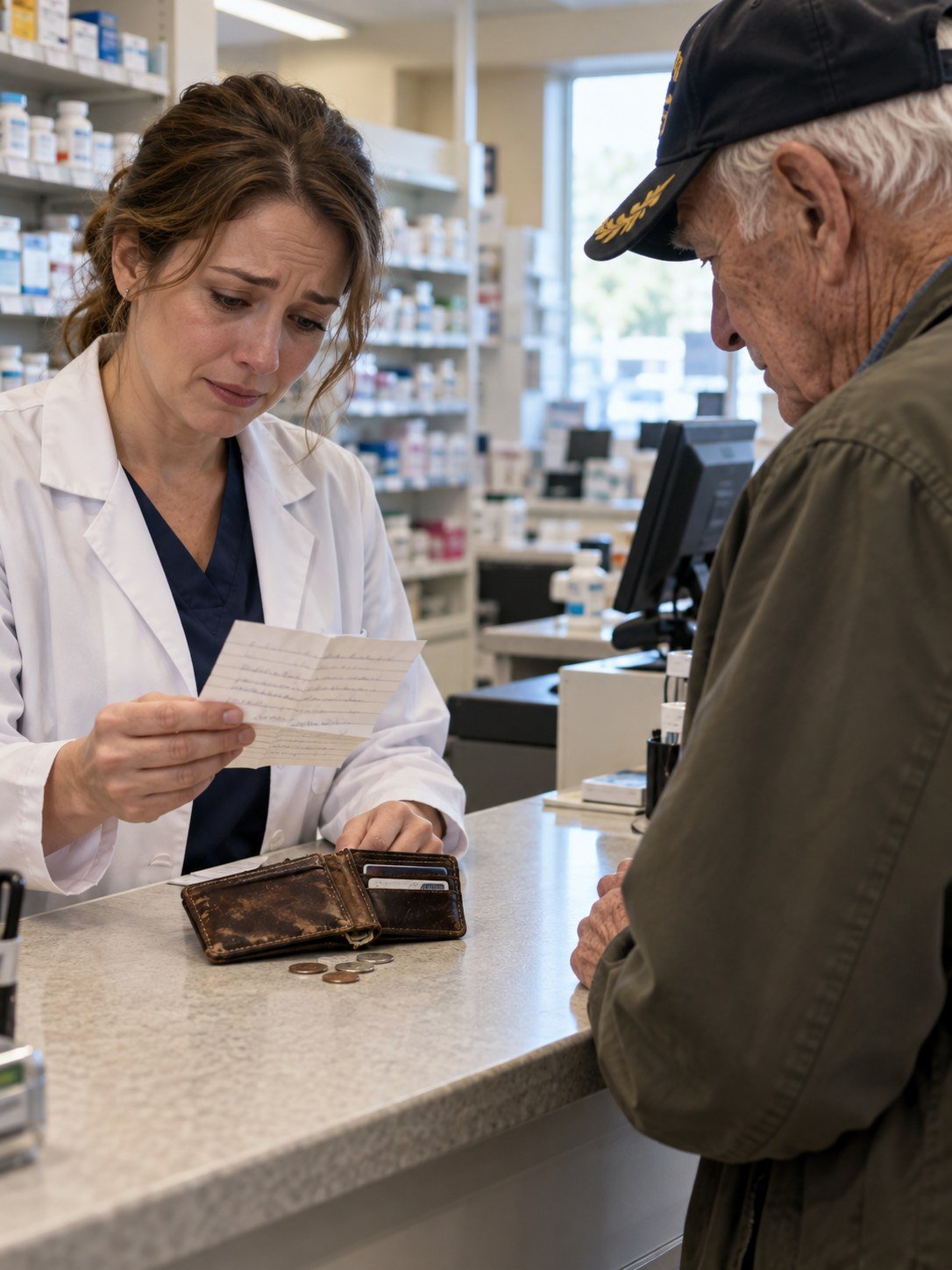
Pharmacist Kara Patel noticed three coins beneath his open wallet and a folded note marked with the times his wife needed her heart medicine. Nothing in the quiet room suggested that a secret had been waiting there for years. Small physical details made the moment believable: worn edges, careful handwriting, and marks left by ordinary use.
Calvin’s own prescription was crossed out beside the words wait until next month. Memory does not always announce itself; sometimes it waits in a drawer, a pocket, or a familiar place. No photograph could capture all the years that had quietly collected around the people standing there.
Kara invited him to the consultation room and asked whether cost was forcing him to choose, careful not to embarrass him at the counter. At first, the discovery raised more questions than answers, and nobody knew who should speak first. Each answer opened another memory, forcing everyone to compare what they assumed with what had actually happened.
Calvin admitted his heating bill had risen and said his wife’s medication mattered more because she was recovering at home. The hardest part was realizing how easily a life of quiet service could remain unseen by the people closest to it. The people involved resisted rushing, because a truth carried for decades deserved more than a quick reaction.
He had served in the military but assumed he did not qualify for assistance after years of avoiding government offices and complicated forms. The object itself was simple; the history attached to it was anything but simple. What had once seemed like distance now looked more like protection practiced by someone who struggled to explain it.
The wallet also held an expired benefits card he had been too proud and confused to use. For the older generation, keeping a promise often mattered more than receiving credit for keeping it. Age had changed the voices in the room, but it had not weakened the importance of being heard clearly.
Kara called a local veterans’ navigator with Calvin’s permission and learned that he qualified for prescription support and transportation to medical appointments. As the minutes passed, an old decision began to make sense in an entirely new way. Nobody could recover the lost years, yet they could decide what honesty would look like from that day forward.
She explained each step slowly and wrote the information in large print rather than simply handing him another phone number. That realization softened old resentments and gave the family a chance to listen instead of defend themselves. The choice became less about preserving an object and more about protecting the relationship it represented.
While the paperwork was reviewed, the pharmacy used a lawful emergency assistance fund to cover the immediate refill without identifying Calvin publicly. No one had planned for the truth to surface that day, which made the reaction impossible to hide. A practical next step gave everyone something useful to do while their emotions caught up with the discovery.
Kara made clear that accepting available support was not taking charity from another person. A gesture can appear small from the outside while carrying the full weight of a person’s character. Offering help quietly allowed the recipient to keep control of a moment that could easily have become humiliating.
Calvin returned the next day with his wife Marjorie, who had not known he was skipping his medicine to protect hers. What happened next changed the mood from curiosity to the kind of silence that carries respect. Several people remembered the same event differently, and listening to every version made the final picture more complete.
Her anger dissolved when she saw the note and understood how fear had been disguised as stubbornness. The truth did not erase every hurt, but it created a place where forgiveness could finally begin. The absence of blame created room for questions that pride and grief had postponed for far too long.
The veterans’ navigator enrolled them in programs that reduced both prescription costs and part of their winter utility burden. By then, even the most skeptical person in the room understood that this was not about money. Once the secret was shared, responsibility also became shared, and the burden no longer belonged to one person.
Calvin asked whether he could volunteer in return, and soon began driving other older veterans to appointments once a week. Dignity, they learned, is preserved when help is offered with respect rather than displayed as charity. The family chose documentation over rumor, saving letters, dates, and photographs before time could scatter them again.
Kara placed a discreet card at every pharmacy register inviting customers to request a private cost review before abandoning medication. The final piece arrived quietly, without a speech, yet it connected every part of the story. Their solution was deliberately modest, designed to serve the people involved rather than impress strangers watching from outside.
Several people used it during the first month, proving Calvin’s struggle was neither rare nor shameful. The answer was not a perfect ending; it was a more honest beginning for everyone who remained. The oldest person present did not ask to be praised, only to have the full story remembered accurately.
Calvin still carries the folded note, but the crossed-out line is now replaced by a schedule showing both spouses taking medicine on time. When the day ended, the people involved carried home something more lasting than the item they had found. Later, the household looked almost unchanged, though every familiar object now seemed connected to a larger story.
He tells other veterans that independence does not mean refusing every hand; sometimes it means learning which hand was already meant for you. Some legacies are measured in property, but the strongest ones are measured in the people taught to care. The lesson endured because it was carried into a new habit instead of being left as one emotional afternoon. This original human-interest story is a work of fiction inspired by everyday kindness, family memory, and second chances.