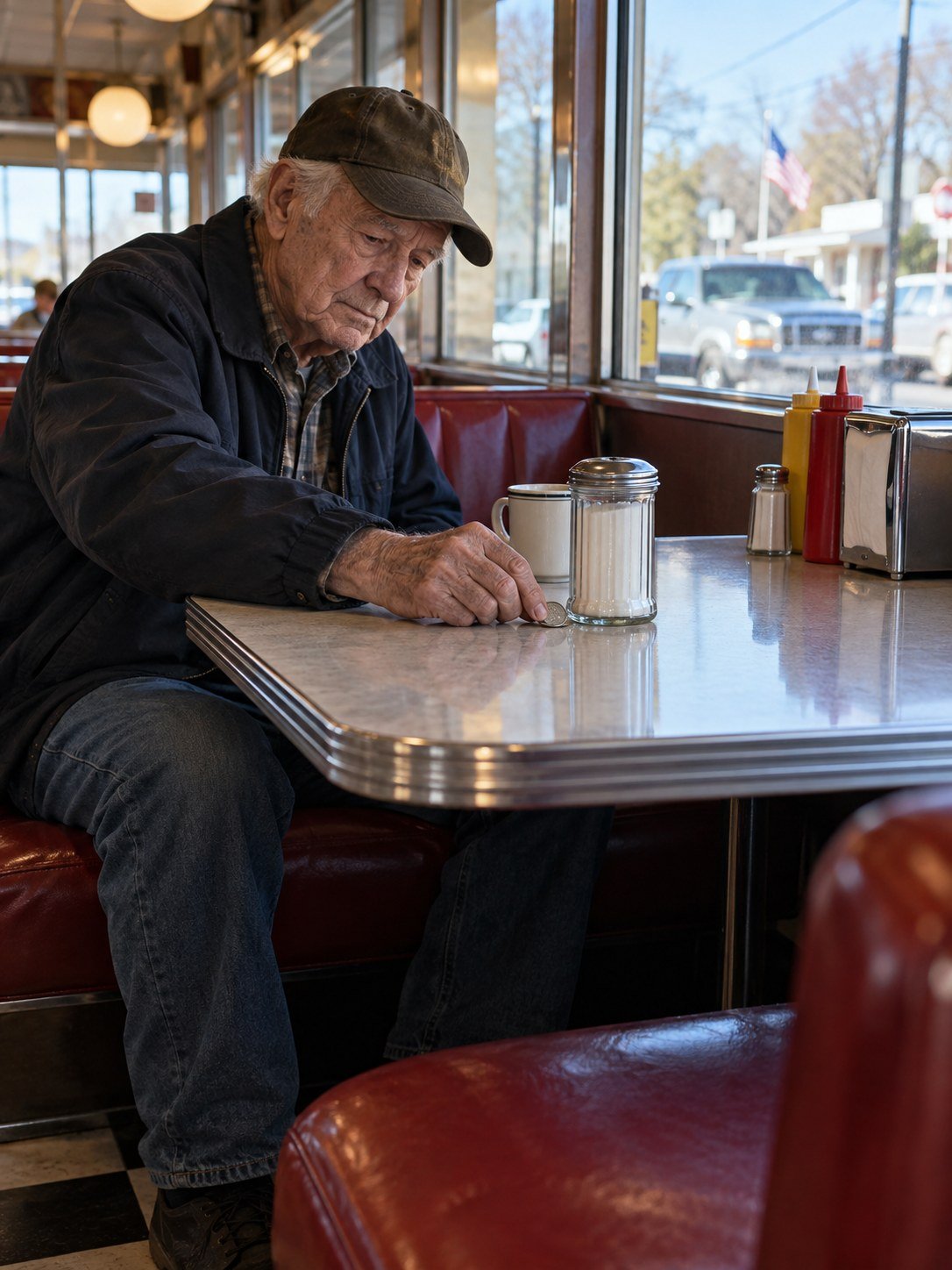
Frank chooses booth four every Friday at noon, orders black coffee, and places a quarter beneath the glass sugar jar before leaving. The first few minutes are deliberately ordinary, which makes the detail at the center of the moment feel believable instead of staged. In a family diner beside the county highway, the detail that keeps drawing attention is a worn 1967 quarter kept beneath the sugar jar.
That beginning shows how often a turning point hides inside a repeated habit. People rarely know which ordinary morning will reveal the meaning of something they have seen for years. Seen through Frank Delaney, an eighty-one-year-old veteran, the moment gains a human scale and avoids turning a complicated experience into a slogan or a single dramatic image.
The staff assumes it is an old-fashioned tip until waitress Kiara notices he leaves normal gratuity beside the bill and never uses a different coin. Small marks of use and age remain visible, grounding the discovery in routines that continued long before anyone understood their importance. In a family diner beside the county highway, the detail that keeps drawing attention is a worn 1967 quarter kept beneath the sugar jar.
Memory is rarely kept in grand monuments alone. It settles into paper, fabric, tools, furniture, and the small physical things a family almost throws away. Seen through Frank Delaney, an eighty-one-year-old veteran, the moment gains a human scale and avoids turning a complicated experience into a slogan or a single dramatic image.
During renovation, the booth is removed and the owner finds a note Frank taped underneath with another serviceman’s name and the words one cup owed. People nearby do not interrupt. They allow the explanation to arrive at its own pace and resist turning private emotion into a performance. In a family diner beside the county highway, the detail that keeps drawing attention is a worn 1967 quarter kept beneath the sugar jar.
The story becomes stronger when nobody is reduced to one generous act or one painful mistake. A full life contains pride, fear, affection, silence, and chances to respond differently. Seen through Frank Delaney, an eighty-one-year-old veteran, the moment gains a human scale and avoids turning a complicated experience into a slogan or a single dramatic image.
Frank explains that his friend Samuel paid for their last stateside coffee with a quarter and joked that the next one would be Frank’s responsibility. The object matters because it has been handled, misplaced, protected, and carried through real changes rather than stored as a perfect decoration. In a family diner beside the county highway, the detail that keeps drawing attention is a worn 1967 quarter kept beneath the sugar jar.
Helping well also means protecting the other person’s control. Kindness loses part of its value when it demands public gratitude or turns vulnerability into somebody else’s reward. Seen through Frank Delaney, an eighty-one-year-old veteran, the moment gains a human scale and avoids turning a complicated experience into a slogan or a single dramatic image.
Samuel died overseas before they could meet again, and Frank chose the diner near Samuel’s hometown as the place to keep the promise. What initially looks like coincidence begins to form a clear line between an old choice and the people affected by it years later. In a family diner beside the county highway, the detail that keeps drawing attention is a worn 1967 quarter kept beneath the sugar jar.
Old misunderstandings often survive because each person has only one portion of the record. A letter, photograph, or witness can widen the view without pretending every hurt disappears. Seen through Frank Delaney, an eighty-one-year-old veteran, the moment gains a human scale and avoids turning a complicated experience into a slogan or a single dramatic image.
He avoided telling the family because he feared arriving as a stranger carrying a grief they had spent decades learning to live beside. No single answer removes the difficulty, but it gives everyone a respectful next step and a reason to keep listening. In a family diner beside the county highway, the detail that keeps drawing attention is a worn 1967 quarter kept beneath the sugar jar.
Listening matters here as much as action. The people closest to the event need time to decide what should be shared, what should remain private, and what repair is still possible. Seen through Frank Delaney, an eighty-one-year-old veteran, the moment gains a human scale and avoids turning a complicated experience into a slogan or a single dramatic image.
Kiara locates Samuel’s niece through the county veterans office, sharing only enough information to let the family decide whether to respond. The reaction is quiet: a pause, a repeated name, and the careful way somebody reaches for something believed to be lost. In a family diner beside the county highway, the detail that keeps drawing attention is a worn 1967 quarter kept beneath the sugar jar.
The emotional weight comes from recognition rather than surprise alone. Something from the past becomes visible in the present and asks the family to see familiar choices with new patience. Seen through Frank Delaney, an eighty-one-year-old veteran, the moment gains a human scale and avoids turning a complicated experience into a slogan or a single dramatic image.
The niece joins Frank at booth four and brings Samuel’s photograph, allowing two incomplete versions of the same young man to meet. Practical details follow the emotion, because preserving dignity requires consent, privacy, and attention to what the people involved actually want. In a family diner beside the county highway, the detail that keeps drawing attention is a worn 1967 quarter kept beneath the sugar jar.
A useful response turns feeling into a habit, procedure, archive, or renewed relationship. That is how one moving day can continue helping after the first attention fades. Seen through Frank Delaney, an eighty-one-year-old veteran, the moment gains a human scale and avoids turning a complicated experience into a slogan or a single dramatic image.
The owner seals the quarter into the restored tabletop beneath clear resin, beside a small card that mentions friendship without turning loss into spectacle. The solution stays modest enough to serve the relationship rather than the audience, leaving room for memory to remain complicated. In a family diner beside the county highway, the detail that keeps drawing attention is a worn 1967 quarter kept beneath the sugar jar.
No ending can return lost years or restore every missing conversation. It can, however, replace one painful assumption with a more truthful story people are able to carry together. Seen through Frank Delaney, an eighty-one-year-old veteran, the moment gains a human scale and avoids turning a complicated experience into a slogan or a single dramatic image.
Frank continues coming on Fridays, but now he orders two coffees whenever Samuel’s niece visits and leaves the table without owing anything. By the end, the setting looks almost unchanged, yet the familiar object now carries a story that can no longer be overlooked. In a family diner beside the county highway, the detail that keeps drawing attention is a worn 1967 quarter kept beneath the sugar jar.
The keepsake survives because it now has context. Future generations will inherit not merely an object, but an explanation of the care, failure, courage, and second chance attached to it. Seen through Frank Delaney, an eighty-one-year-old veteran, the moment gains a human scale and avoids turning a complicated experience into a slogan or a single dramatic image. This original human-interest story is fictional and was created to explore everyday kindness, memory, dignity, and second chances.